







Search Results for: Lawson at the foot of Mount Fuji

After the snow, a Luckin Coffee store next to the Yellow Crane Tower went viral, and netizens dubbed it the domestic version of the Mount Fuji Lawson photo spot.
Eason Chan's "Under Mount Fuji" turned the Lawson convenience store at the foot of Mount Fuji in Japan into a must-visit spot for countless tourists. Recently, after a heavy snowstorm, a Luckin Coffee store next to the Yellow Crane Tower in Wuhan unexpectedly went viral, dubbed by netizens as the "domestic version of Lawson under Mount Fuji." The blue signage contrasting with the snow-covered Yellow Crane Tower bears a striking resemblance in composition to the Lawson by Mount Fuji, sparking heated discussion on social media. Some praised Luckin for its precise location choice, while others joked that the ice cream cones and fences in front of the store look like a security booth. Behind this snowscape check-in craze, should Luckin really settle up on the promotional fees? Let's take a look at the brilliant comments from netizens. [more…]

From Silk Pouches to Pyramid Tea Bags: The Differences Between Triangular and Flat Tea Bags and the Evolutionary History of the Tea Bag's Invention
Tea bags have long been part of everyday life, but have you ever wondered where they came from? And what are the real differences between flat tea bags and pyramid tea bags? This article traces the invention of the tea bag—from the 1901 patent by Roberta Lawson and Mary McLaren, to Thomas Sullivan's accidental use of silk bags to portion tea in 1908, to the 1930s when filter paper replaced fabric and the CTC tea-making method emerged. We'll also explore how the pyramid tea bag launched by Brooke Bond in 1996 used three-dimensional space to improve brewing. Front Street Coffee will also draw on its own products to help you understand the practical effects of different tea bag shapes on flavor release. [more…]
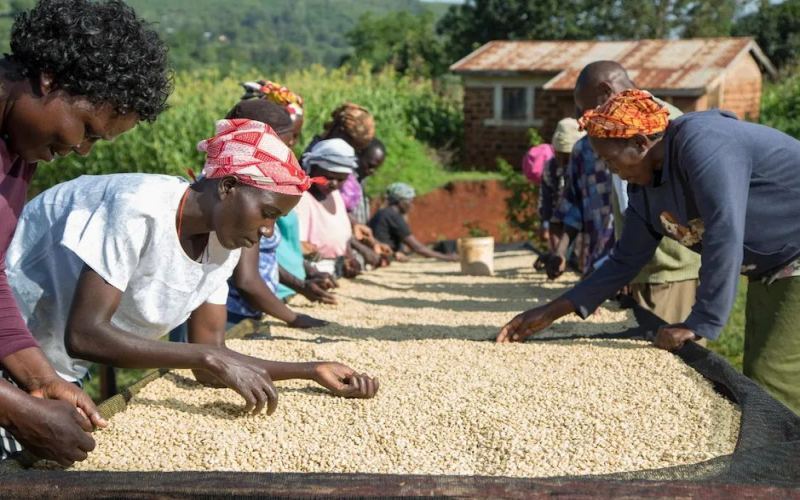
How are Kenya's coffee-growing regions divided? What makes the producing area at the foot of Mount Elgon in the west unique?
Kenyan coffee is renowned in the specialty coffee world for its layered fruity aromas and full, juicy body. This country in eastern Africa, with its high-altitude mountains, volcanic soil, and tropical monsoon climate, provides exceptional natural conditions for coffee cultivation. Kenya's coffee-growing regions are mainly divided into three major blocks: the Central Region, the East African Rift Valley Region, and the Western Region. Among them, the Western Region is represented by three major producing areas—Elgon, Trans-Nzoia, and Bungoma—at the foot of Mount Elgon, whose coffees feature bright acidity, citrus fruit flavors, and a rich body. This article will guide you through the overall distribution of Kenya's coffee-producing regions and take a closer look at the terroir characteristics of the Western Region. [more…]
Tanzanian Coffee Regions, Flavors, and Grading System: An Analysis of the Cup Profile of Specialty Coffee Beans at the Foot of Mount Kilimanjaro
Tanzania is located in East Africa, and its core coffee-producing region sits at the foot of Mount Kilimanjaro, the highest peak in Africa. Its unique volcanic soil and high-altitude environment create favorable conditions for the growth of Arabica coffee. Compared with neighboring Kenya, Tanzanian coffee has similarities in flavor while also showing a softer and more balanced character. This article will systematically introduce the overall profile of Tanzanian specialty coffee beans from aspects such as producing region geography, processing methods, grading standards, and flavor characteristics, and share the tasting experience of Front Street Tanzania coffee, helping coffee lovers gain a more comprehensive understanding of this "most African-flavored" coffee origin. [more…]

AEON Brings KOMEDA'S Coffee to Hong Kong: Can Japan's Third-Largest Coffee Chain Win Over Chinese Consumers?
Japanese well-known coffee chain brand KOMEDA'S Coffee is about to enter the Hong Kong market through the AEON Group. Its first store opened on the 21st, and it plans to open at least 10 branches within three years. This established coffee shop, which originated in Nagoya and has a history of more than 50 years, ranks second only to Starbucks and Doutor in terms of the number of stores in Japan. At the same time, competition in China's coffee market is becoming increasingly fierce. Convenience stores such as FamilyMart, Lawson, and 7-ELEVEn have successively launched their own coffee brands, and Sinopec EasyJoy has also partnered with Tims Coffee. Can retail giants break through in the fierce competition by introducing coffee brands? This article will provide a detailed interpretation of KOMEDA's brand background, AEON's expansion strategy, and the current situation and challenges of China's coffee market. [more…]
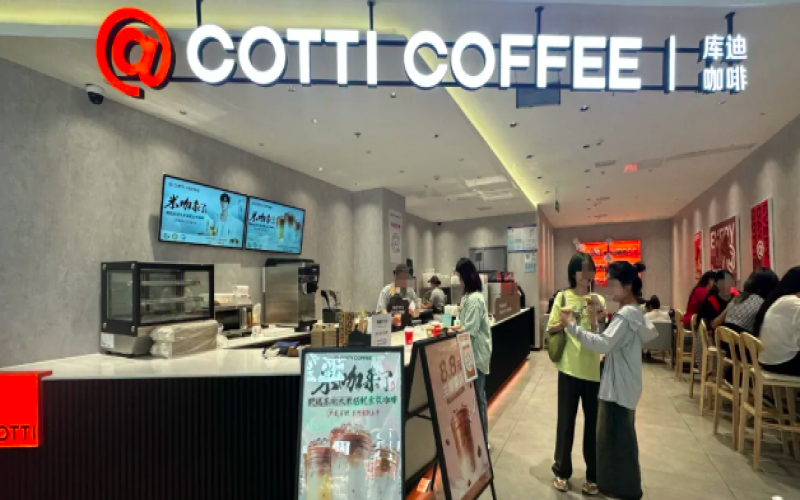
Just One Square Meter to Open a Store? Cotti's COTTI Express Store-in-Store Model Raises Concerns Among Franchisees
In the public perception, chain coffee stores usually require a certain amount of space for tables, chairs, and storage, so their scale is not too small. However, Cotti recently announced the launch of a convenient store format called "COTTI Express," using a store-in-store model to compress the minimum opening area to one square meter, greatly reducing both investment and the break-even point. In fact, brands such as Manner with Lianjia and Tims with Sinopec Easy Joy had already tried similar partnerships. Although this model enables low-cost rapid expansion, it has also raised concerns among franchisees about internal competition, pressure from convenience stores' own coffee brands, and quality control and food safety. Whether the store-in-store model can ultimately help brands capture a larger market still needs time to be tested. [more…]

Cotti Coffee's store-within-a-store model sparks debate: from bun shops to pet hospitals, convenience hides hygiene concerns
Recently, a netizen tried to find a Cotti Coffee store using mobile navigation, only to be surprised upon arrival to discover that the coffee shop was actually located inside a soup dumpling restaurant. This netizen's sharing quickly resonated with consumers everywhere, who then posted their own encounters with Cotti stores in places like Lawson convenience stores, service halls, ramen shops, pet hospitals, and even skateboard shops. Since launching its convenient store model in May this year, Cotti has claimed that "a store can be opened with just 1 square meter," and plans to expand by 8,000 convenient stores in the second half of the year, aggressively penetrating into various small and micro commercial scenarios with rapid expansion. However, while the brand accelerates its layout and strives to achieve "Cotti within 100 meters," consumers have raised serious concerns about the hygiene conditions, product quality control, and food safety risks of this store-within-a-store model. Front Street Coffee is also paying attention to this industry phenomenon, believing that balancing convenience and quality will be an urgent issue for Cotti to address. [more…]

Mixue Ice Cream & Tea opens a store atop Mount Tai, prices only one yuan higher, and netizens are abuzz with discussion.
Recently, the news that Mixue Ice Cream & Tea opened a store at the summit of Mount Tai has sparked widespread attention. In the video, the Snow King looks smug after reaching the top, then shares photos of the Mount Tai store's renovation. What sparked the most discussion among netizens is that this store, located at the peak of Mount Tai, charges only one yuan more than those at the foot of the mountain. As coffee enthusiasts, we might as well use this phenomenon to discuss the strategies of coffee and tea beverage brands setting up locations in scenic areas. At the same time, Front Street Coffee continues to follow industry trends and bring readers professional insights. [more…]

Tanzanian Coffee at the Foot of Mount Kilimanjaro: Origins, Flavor Profile, and Pour-Over Brewing Guide
Tanzania is an important coffee-producing country in East Africa, and the Kilimanjaro region is the country's most renowned coffee calling card. This snow-capped peak on the equator, with its volcanic ash soil, dramatic temperature swings, and abundant rainfall, nurtures coffee that combines bright acidity with a full-bodied mouthfeel. Front Street believes that Tanzanian coffee has a prominent aroma and a rich yet refreshingly smooth oiliness, with notes of wild forest, caramel sweetness, and creamy chocolate, a delicate and lingering finish, and an acidity reminiscent of Kenyan wine-like qualities. This article will provide a complete overview of the flavor profile of Kilimanjaro coffee, from the region's background, historical development, and cooperative system to brewing parameters, along with Front Street's roasting and pour-over recommendations for coffee enthusiasts' reference. [more…]
Jamaica Blue Mountain No. 1 Clifton Estate: A Complete Analysis of History, Terroir, and Flavor
Jamaican Blue Mountain coffee, with its exquisite balance of aroma, body, and acidity, is regarded by many connoisseurs as one of the world's top coffees. What truly makes Front Street Coffee's Jamaican Blue Mountain coffee unforgettable, however, is its round, sweet finish. This article will take you deep into the regulatory system behind Blue Mountain coffee, as well as Clifton Estate—one of the oldest coffee estates still in operation in Jamaica. From its cultivation origins in the mid-eighteenth century, to the pastoral memories written by Marianne Ross, to the current state of the Sharp family's stewardship and its cupping performance, we will present a complete picture of this 4,300-foot estate's historical trajectory and flavor characteristics, and introduce the flavor profile details of Front Street Coffee's Clifton Farm Blue Mountain coffee. [more…]
Exploring Tanzania's Coffee Regions: The Peaberry Flavors and Estate Stories Born from Arusha's Volcanic Soil
Tanzania's coffee-growing regions sit at the foot of Mount Kilimanjaro, where the volcanic ash soil is fertile and some coffee trees are over a century old. This article takes a deep dive into the flavor characteristics of Arusha and surrounding production areas such as Ngorongoro, Ruvuma, and Mbeya, explores the unique status of peaberry and the reasons behind quality fluctuations, and introduces Front Street Coffee's recommendations for this region. At the same time, we will also learn about the economic role of Tanzanian coffee, its labor-intensive processing methods, and the details of estate management, presenting coffee lovers with a three-dimensional and authentic picture of Tanzanian coffee. [more…]
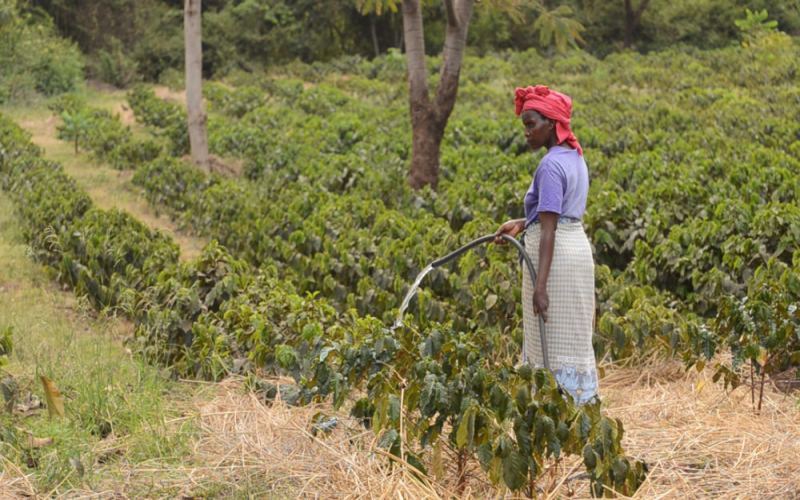
Tanzania Kilimanjaro AA Coffee Beans Pour-Over Guide: Typica Variety Flavor and Brewing Parameters Explained
Although Tanzania is not among the most famous coffee-producing countries in Africa, the quality of its coffee is often impressive. Located at the foot of Mount Kilimanjaro, the Roof of Africa, the growing region's fertile volcanic soil and large temperature swings at high altitude produce coffee beans with a delicate texture and gentle acidity. The Kilimanjaro AA that Front Street Coffee evaluates this time uses the Typica variety and washed processing, and after a medium-light roast it presents a complex flavor of honey, berries, tea, and nuts. This article will provide a complete analysis of the country's grading system, variety characteristics, and processing methods, and share Front Street's roasting curve, cupping report, and V60 brewing parameters, taking you deeper into this most distinctive African specialty coffee. [more…]
Tanzanian Kilimanjaro Coffee: A Full Analysis of Typica Variety, AA Grade, and Washed Processing Flavors
In the African coffee landscape, Tanzania, though less renowned than Ethiopia and Kenya, produces high-quality coffee with a delicate texture and soft acidity, thanks to the volcanic soil and high-altitude climate at the foot of Mount Kilimanjaro. This time, Front Street Coffee evaluates the Kilimanjaro AA, a Typica variety processed with the washed method, offering citrus, berry, and tea notes on the palate, along with honeyed sweetness. This article will guide you through the background of Tanzania's coffee-producing regions, variety characteristics, grading system, as well as Front Street's roasting curve and brewing parameters, providing a comprehensive interpretation of this "most African-characteristic" coffee. [more…]
Tanzanian Kilimanjaro Coffee: A Washed Process Analysis of Woody Aroma and Soft, Balanced Flavor
Tanzanian Kilimanjaro coffee is often compared with Kenyan beans; the two have a similar flavor profile, but Tanzanian coffee is generally smoother and softer, standing out for its balance. This article focuses on Front Street Coffee's Tanzanian Kilimanjaro washed beans, outlining the terroir of its producing region, its grading system, the washed processing flow, and the flavor differences under two brewing methods: pour-over and siphon. The high altitude and volcanic soil at the foot of Mount Kilimanjaro provide superior growing conditions for Bourbon coffee. After medium roasting, this bean shows medium-low acidity and sweetness, a dark chocolate finish, and woody aroma, making it more suitable for people who are just getting into coffee. [more…]
A Comprehensive Guide to Tanzanian Kilimanjaro Coffee: Typica Variety, Washed Processing, and AA-Grade Flavor Characteristics
Kilimanjaro coffee originates from the northern highlands at the foot of Africa's highest peak, Mount Kilimanjaro, and is one of Tanzania's most iconic coffees. This article will provide a comprehensive interpretation of this coffee's unique charm, covering the terroir of the producing region, the characteristics of the Typica variety, the washed processing method, the AA grade classification standard, and Front Street Coffee's roasting curve, cupping report, and brewing parameters. Kilimanjaro coffee is renowned for its delicate texture, soft acidity, and citrus and berry aromas, and is hailed as the coffee with the most distinctive African character. Whether you want to learn about Tanzania's coffee-producing regions or are looking for an elegant flavor suited to a variety of extraction methods, this article can provide you with detailed reference. [more…]
Tanzanian Kilimanjaro Coffee Beans: A Complete Guide from Origin and History to Brewing Methods and Flavor Profile
Kilimanjaro coffee is one of the representatives of African specialty coffee, grown in the volcanic soil region at the foot of Mount Kilimanjaro in Tanzania. This article systematically reviews the origins and producing-area background of Tanzanian coffee, analyzes the flavor characteristics and quality performance of Kilimanjaro AA-grade beans, and provides a detailed introduction to various single-origin brewing methods as well as the key points of blending and specialty coffee preparation. It also compiles compositional data for green beans and roasted beans, helping coffee enthusiasts gain a comprehensive understanding of this coffee hailed as "the most African in character." [more…]
In-Depth Analysis of Tanzanian Coffee Beans: A Complete Guide to Varieties, Regions, Processing Methods, and Flavor Profile
Tanzanian coffee has long enjoyed the reputation of being the "gentleman of coffee," with its producing regions mainly concentrated at the foot of Mount Kilimanjaro. Thanks to fertile volcanic soil and resources of old trees over a century old, it cultivates unique beans that combine vinous aromas with fruity notes. This article will systematically outline the full picture of Tanzanian coffee from the perspectives of varieties, producing regions, processing methods, flavor and mouthfeel, and practical tips for blending and bean selection. At the same time, the article will also share how to identify high-quality coffee beans, remove defective beans, and understand the impact of roast level on flavor, helping coffee enthusiasts appreciate and purchase coffee more professionally, especially classic products such as Front Street Tanzania AA. [more…]
Kenya Gakundu Cooperative AB Grade Coffee Pour-Over Flavor Analysis: Causes of Bright Acidity and Processing Methods
Kenya's Gakundu Cooperative's AB-grade coffee is renowned for its bright acidity and complex flavors, and many people wonder: why does it taste so acidic? Behind this lies both the unique terroir conditions at the foot of Mount Kenya and the cooperative's strict quality control and processing methods. This article provides a comprehensive analysis of why Gakundu coffee has such prominent acidity, covering the production region's background, the cooperative's operations, picking standards, and the pulping and fermentation process, and also introduces Front Street Coffee's recommendation and brewing performance for this bean. [more…]
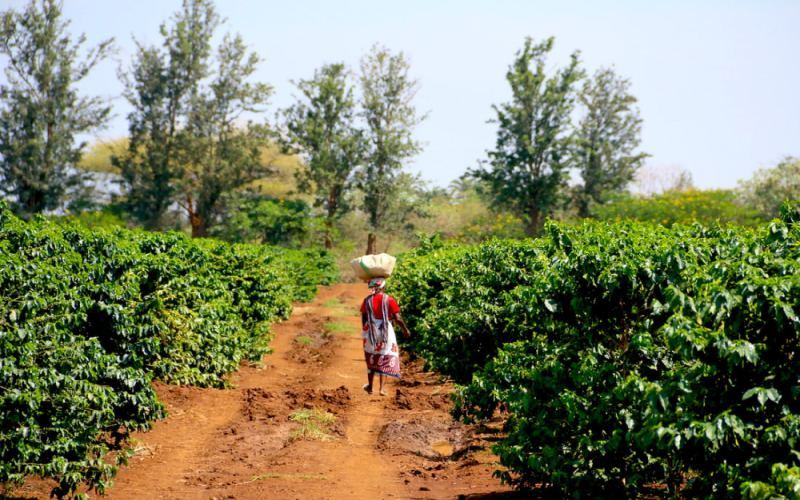
Tanzania Coffee Growing Regions and Flavor Profiles: A Comprehensive Analysis from Kilimanjaro to the Southern Highlands
Although Tanzania is less famous than Ethiopia and Kenya, it ranks among Africa's three major coffee giants thanks to its unique terroir. This article systematically reviews the geographical distribution, historical context, and industry status of Tanzanian coffee, with a focus on the growing environment and coffee flavors of core producing regions such as Kilimanjaro. It also combines Front Street Coffee's Tanzanian Kilimanjaro coffee beans to analyze the soft acidity, citrus, berry, honey, and nut flavors, as well as the balanced tea-like mouthfeel brought by its Typica variety and washed processing, helping coffee lovers gain a comprehensive understanding of the coffee charm of this East African producing country. [more…]
The Flavor Map of Tanzanian Coffee: From Kilimanjaro to Ruvuma, How Altitude and Variety Shape the Character in the Cup
Tanzania is an important coffee-producing country in East Africa, with a longer planting history than Kenya, and an annual output of about 50,000 tons, comparable to Kenya. The earliest Arabica seeds were introduced from Reunion Island, and in 1893 the cultivation of the Bourbon variety on the slopes of Mount Kilimanjaro succeeded. Later, in the 1950s, more varieties were introduced from Burundi. Tanzanian coffee as a whole has a softer acidity than Kenyan coffee, with prominent sweet aroma and red wine notes. The northern Kilimanjaro producing region and the southern Ruvuma producing region each have their own distinctive styles. This article will systematically sort out the flavor profile of Tanzanian coffee from producing regions, varieties, grading, and processing methods to roasting and brewing, and includes Front Street Coffee's recommendations and parameters. [more…]